
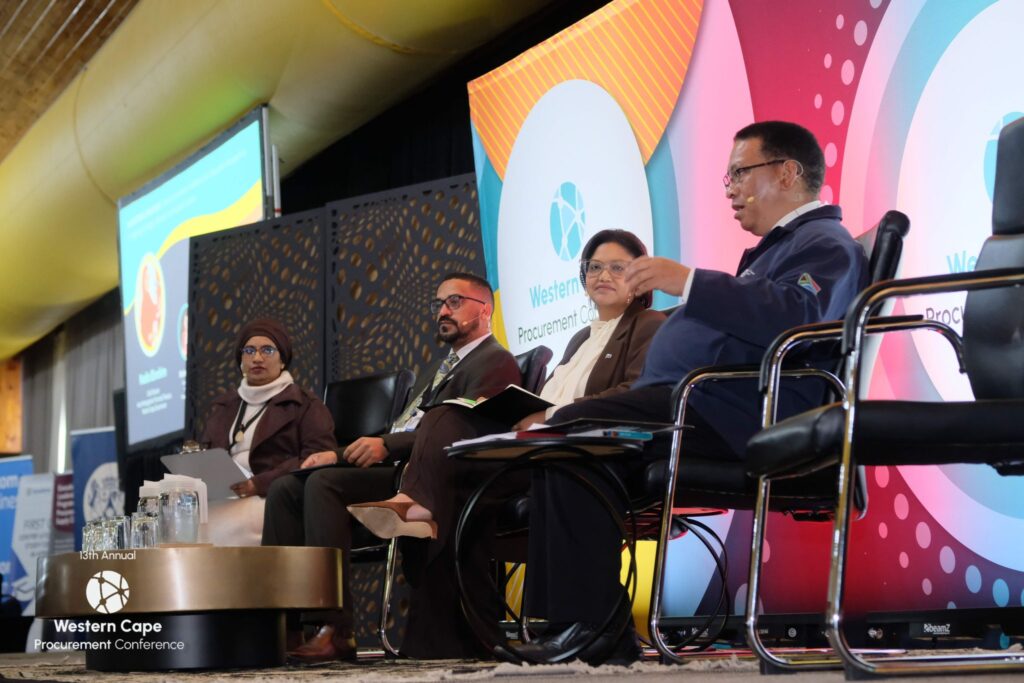
Cape Town, South Africa – More than 500 procurement and supply chain leaders from the public and private sectors gathered in Cape Town for the 13th Annual Western Cape Procurement Conference, hosted by Smart Procurement World, to tackle one of the profession’s most pressing priorities: transforming procurement from a compliance-driven function into a strategic driver of economic growth, infrastructure delivery and improved public service.
Bringing together senior decision-makers from national, provincial and local government, state-owned entities and leading private sector organisations, the conference became a platform for shaping the future of procurement through practical dialogue, shared accountability and collaborative leadership. Throughout the two-day programme, delegates explored how procurement can unlock greater public value, strengthen governance and accelerate service delivery across South Africa.
Setting the tone for the conference, Western Cape Provincial Minister of Finance, Minister Deidré Baartman, reinforced procurement’s central role in building capable government and earning public trust.
"No government can function without procurement. It is a central part of how we deliver services and create value for our residents. The standards we set in procurement directly affect economic growth and jobs, infrastructure delivery, the quality of services and public trust."
Her message set the tone for a conference that consistently challenged delegates to rethink procurement not as a back-office function, but as one of government’s most powerful levers for creating public value, enabling inclusive economic growth and improving the lives of citizens.
A defining moment of the conference was the Ministerial Dialogue – One Government in Motion: An Executive Perspective on Aligning Strategy, Delivery and Value Creation. Moderated by Nadia Ebrahim, Chief Director: Asset Management at the Western Cape Provincial Treasury, the session brought together Minister Deidré Baartman, Dr Ivan Meyer, Minister of Agriculture and Economic Development and Tourism, and Minister Tertuis Simmers, Minister of Infrastructure, to explore how greater alignment across government can improve procurement outcomes and support long-term provincial and national priorities.
The discussion reinforced the vision of a “Connected State”, one where planning, budgeting and service delivery are integrated across departments and spheres of government to maximise impact. Ministers further highlighted the importance of a predictable infrastructure pipeline in attracting private sector investment and reaffirmed that secure energy, water and infrastructure remain fundamental to achieving sustainable economic growth.
Perhaps the strongest message to emerge from the dialogue was the need to move procurement beyond a compliance-focused mindset towards one centred on outcomes, innovation and value for money. Delegates were encouraged to see procurement as a strategic tool for enabling economic inclusion, improving service delivery and creating lasting public value.
Reflecting on the significance of the conference, Debbie Tagg, CEO of Smart Procurement, said:
"The conversations we had over the two days reaffirm that procurement has the power to shape economies, strengthen institutions and improve lives. The real measure of this conference will not be the discussions we had in Cape Town, but the actions delegates take when they return to their organisations. That is how lasting impact is created. At Smart Procurement World, we are proud to convene the leaders and conversations that continue to shape the future of procurement across South Africa."
Reinforcing this call to action, Nadia Ebrahim challenged procurement professionals to measure success not only through financial stewardship, but through their ability to build resilient institutions and lasting partnerships.
"The future will not ask whether Treasury balanced the books. It will ask whether we helped build the capability, resilience and partnerships that enabled government to deliver. That is the challenge before us and that is the opportunity that brings us together."
Beyond policy discussions and strategic dialogue, delegates participated in practical sessions covering supplier development, digital transformation, governance, strategic sourcing and procurement innovation. These sessions equipped procurement professionals with practical tools, real-world case studies and actionable strategies to strengthen governance, improve efficiencies and deliver measurable value within their organisations.
The conference also fostered meaningful collaboration between government, industry and solution providers, creating opportunities for delegates to exchange best practices, strengthen professional networks and collectively address the challenges facing the procurement profession.
The success of the conference was made possible through the support of Smart Procurement World’s valued sponsors and strategic partners, whose continued commitment to advancing procurement excellence strengthens South Africa’s procurement ecosystem. The 13th Annual Western Cape Procurement Conference was proudly supported by Avis Car Rental, Absa, Zycus, Tourvest Travel Services MICEIT, Telkom, Commerce Edge SA, Bluu Car Rental, ProcureChain, PromoOne and the Reside Summit. Their partnership continues to drive innovation, knowledge sharing and collaboration across the public and private sectors.
The conference concluded with a shared commitment from government and industry to advance procurement as a strategic driver of economic growth, service delivery and public trust. Together, delegates identified five priorities that will help shape the future of procurement in South Africa:
1. Move from Compliance to Value Creation
Procurement must evolve beyond compliance to become a strategic enabler of innovation, service delivery, economic growth and measurable public value.
2. Build a Connected State
Greater alignment between planning, budgeting and implementation across departments and spheres of government is essential to delivering better outcomes for citizens.
3. Invest in Infrastructure to Unlock Growth
A predictable infrastructure pipeline, supported by secure energy and water systems, remains fundamental to attracting investment, creating jobs and strengthening South Africa’s economy.
4. Strengthen Partnerships Across the Procurement Ecosystem
Closer collaboration between government, industry and suppliers is key to building a more resilient, transparent and future-ready procurement environment.
5. Lead with Professionalism and Purpose
Procurement professionals have a unique opportunity to create lasting social and economic impact by strengthening relationships, enabling inclusive growth and using procurement as a catalyst for sustainable development.
The value of these conversations was reflected in the feedback from delegates.
"I enjoyed the value attributed to the supply chain and procurement functions and how we can collaborate and work together to achieve our service delivery objectives and goals." – Ryana De Bruyn, Director: Supply Chain Management, Western Cape Education Department
Echoing this sentiment, delegates also recognised the conference’s growing influence within the profession.
"The event was excellent and continues to grow from strength to strength." – Keith Gertse, Accountant: Supply Chain Management, Laingsburg Municipality
As delegates departed the conference, they left with far more than new connections and fresh ideas. They left with a shared commitment to champion value-driven procurement, strengthen collaboration across sectors and position procurement as one of South Africa’s most powerful drivers of economic growth, service delivery and public trust.
The conversations sparked at the 13th Annual Western Cape Procurement Conference will continue long after the event has concluded, reinforcing Smart Procurement World’s role as a trusted convener of industry leaders and a catalyst for advancing procurement excellence across South Africa.
Because when procurement leaders come together with a shared purpose, they don’t simply strengthen supply chains—they help shape economies, build stronger institutions and improve lives.